Solid-State Battery Breakthrough: UC Riverside Researchers Promise 3-Minute Charging and Longer Life
A research team at UC Riverside has unveiled a solid-state battery prototype that charges in just 3 minutes and lasts significantly longer than traditional lithium-ion batteries. This technological leap could revolutionize electric vehicles (EVs) and consumer electronics, addressing two of the most critical pain points—charging time and battery longevity.






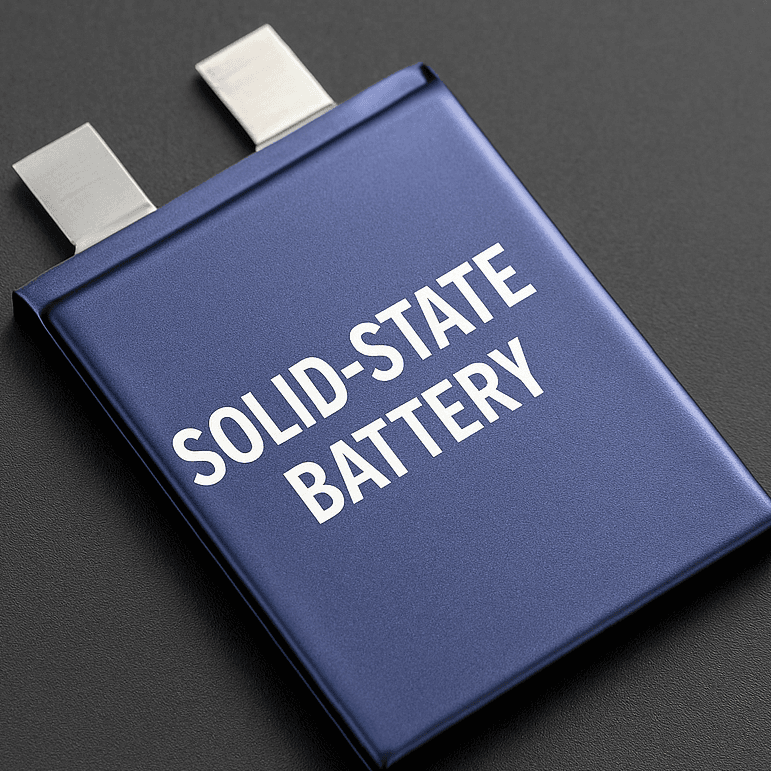
What Are Solid-State Batteries?
Unlike conventional lithium-ion batteries that use liquid electrolytes, solid-state batteries use solid electrolytes, making them:
- Safer (reduced fire and leakage risk)
- More energy-dense (more power in less space)
- Longer-lasting (greater cycle stability)
- Faster to charge (thanks to improved ion transport)
Solid-state batteries have long been heralded as the "holy grail" of energy storage—but until now, manufacturing hurdles and cost concerns held back mass deployment.
UC Riverside’s Breakthrough
The UC Riverside team, led by Dr. Mihri Ozkan, developed a hybrid solid electrolyte using bio-derived polymer composites. This unique material allows:
- Ultrafast ion mobility, enabling 0–80% charge in just 3 minutes
- Up to 2,500 full charge cycles before capacity degradation (versus 500–1,000 for current lithium-ion)
- Stable performance at extreme temperatures (from −10°C to 60°C)
“We’ve created a scalable, non-toxic, high-performance solid-state battery platform,” said Dr. Ozkan. “This isn’t just lab theory—it’s production-ready.”
Also Read: Germany Bets Big on Quantum: $5 Billion Push to Industrialize Quantum Computing
Implications for EVs and Consumer Tech
Electric Vehicles (EVs):
- Range anxiety solved: Rapid charging makes EVs as convenient as gasoline refueling.
- Improved battery lifespan: Extends vehicle resale value and reduces long-term cost of ownership.
- Smaller battery packs: More cabin space, lighter vehicles, and lower material usage.
Consumer Electronics:
- Phones and laptops could soon be charged in under 5 minutes.
- Devices may last 5–7 years on the same battery without needing replacement.
- Companies like Tesla, Toyota, and Samsung have all invested in solid-state R&D, but UC Riverside’s open-access research could accelerate adoption industry-wide.
What’s Next?
The team is already in talks with several battery manufacturers and auto OEMs to license their technology. If successful, mass production could begin by 2027, with consumer devices adopting the tech by 2028.
In a time when climate urgency, EV scale-up, and tech sustainability are at the forefront, UC Riverside’s breakthrough couldn’t have come at a better time.
Tags
Share
You may also like

Summary
Read Full
open_in_newDiscover AI-powered tools that can convert images of tables and diagrams into modifiable PowerPoint presentations, enhancing productivity and efficiency

Summary
Read Full
open_in_newArtificial intelligence is a complex field, but understanding its basics can be straightforward. This guide provides an introduction to AI, its types, and its applications.

Summary
Read Full
open_in_newMozilla has released Firefox 148, introducing new settings for AI controls, improved performance, and enhanced user experience
Revolutionizing Podcasting with Qwen3-TTS Studio: Local Voice Cloning and Automated Content Generation
Summary
Read Full
open_in_newDiscover the cutting-edge Qwen3-TTS Studio, a groundbreaking tool that enables local voice cloning and podcast generation, transforming the world of audio content creation.

Summary
Read Full
open_in_newAs concerns over data privacy and national security grow, countries around the world are seeking to reduce their dependence on U.S. tech giants, sparking a global shift in the way we think about technology and digital sovereignty

Summary
Read Full
open_in_newMozilla's Firefox browser is set to introduce a new switch that allows users to turn off AI features, providing greater control over their browsing experience, starting February 24

Summary
Read Full
open_in_newElon Musk has seemingly confirmed the long-rumored merger between SpaceX and xAI, a move that could have significant implications for the tech and space industries.
Post a comment
Comments

Most Popular


Categories