AI-Supported Breast Cancer Screening: A Landmark Trial's Findings
A recent landmark trial has found that AI-supported breast cancer screening can spot more cancers earlier, potentially saving lives and improving treatment outcomes






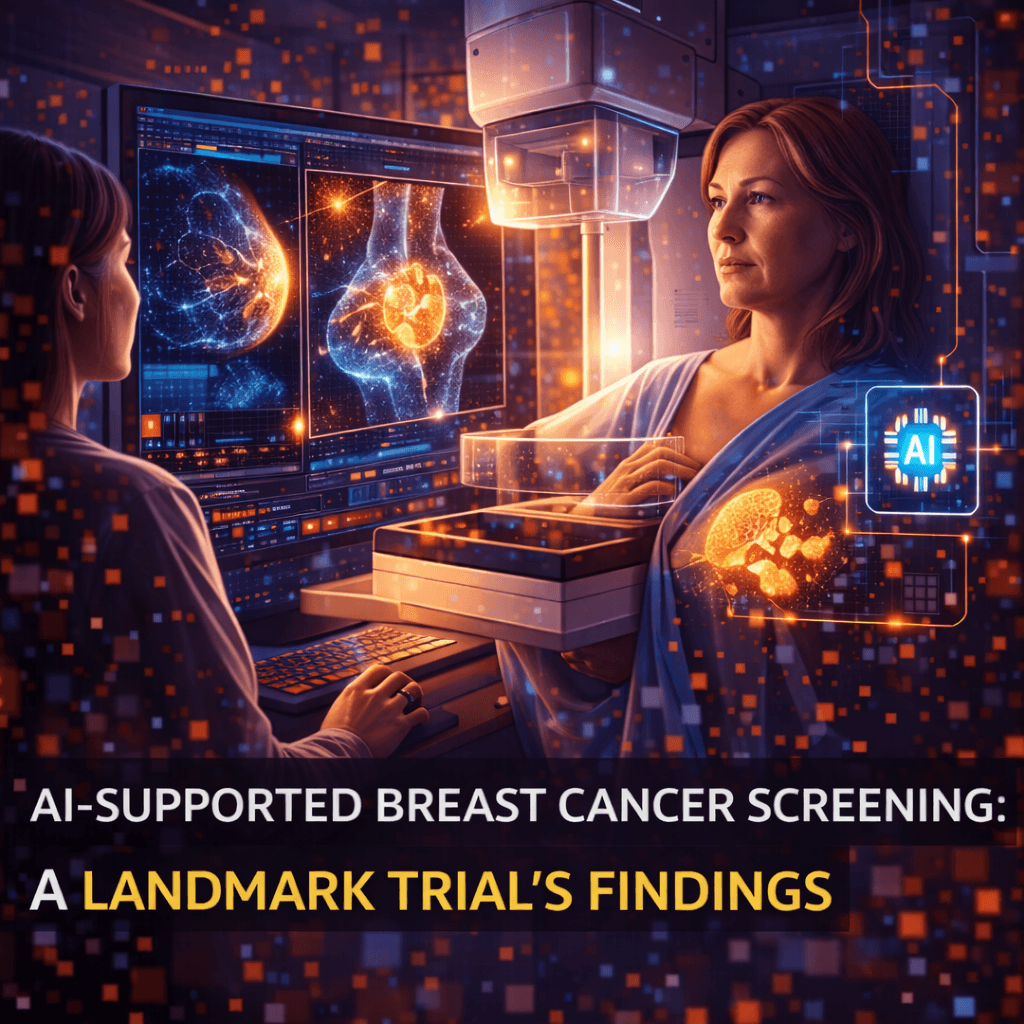
AI-Supported Breast Cancer Screening: A Landmark Trial's Findings
A groundbreaking study has revealed that artificial intelligence (AI) can significantly enhance breast cancer screening by detecting more cancers at an earlier stage. The trial, which involved a large cohort of patients, demonstrated that AI-supported screening can improve the accuracy of breast cancer diagnosis, leading to better treatment outcomes and potentially saving lives.
The study's findings are based on a comprehensive analysis of breast cancer screening data, which showed that AI-assisted detection can identify more cancers than traditional screening methods alone. This suggests that AI has the potential to become a valuable tool in the fight against breast cancer, particularly in cases where the disease is difficult to diagnose.
Key Findings
The trial's key findings include:
- An increase in the detection of breast cancers at an early stage, when they are more treatable
- An improvement in the accuracy of breast cancer diagnosis, reducing the risk of false positives and false negatives
- A potential reduction in the number of unnecessary biopsies and other invasive procedures
Implications and Future Directions
The study's results have significant implications for the future of breast cancer screening and diagnosis. As AI technology continues to evolve, it is likely that we will see even more advanced AI-supported screening tools being developed and implemented in clinical practice. This could lead to improved patient outcomes, reduced healthcare costs, and a greater emphasis on preventative care.
Share
You may also like
The Future of Human-Created 3D Graphics: Trends and Opportunities
Summary
Read Full
open_in_newHuman-created 3D graphics have been a staple of the entertainment and design industries for decades, but with the rise of AI-generated content, many are wondering if they still have a future

Revolutionizing Browser Capabilities: The First Chrome Extension to Run LLMs In-Browser
Summary
Read Full
open_in_newA groundbreaking Chrome extension has been developed, leveraging WebGPU, Transformers.js, and Chrome's Prompt API to run large language models entirely within the browser, paving the way for enhanced privacy and performance

Summary
Read Full
open_in_newDiscord is introducing a new policy that assumes all users are underage unless they provide proof of age, raising concerns about data privacy and online safety

Summary
Read Full
open_in_newA domain that sold for $70 million failed to withstand the traffic generated by a Super Bowl ad, highlighting the importance of website infrastructure and scalability

Discord Introduces New Verification Process: Face Scan or ID Required for Full Access
Summary
Read Full
open_in_newDiscord announces a major update to its verification process, requiring users to provide a face scan or government-issued ID for full access to the platform starting next month.

Chinese AI Company Unveils Revolutionary $173K 'Biometric' Robot for Human Companionship
Summary
Read Full
open_in_newA Chinese AI company has introduced a cutting-edge robot designed to provide human-like companionship, featuring advanced biometric capabilities and a hefty price tag of $173,000

Summary
Read Full
open_in_newThe Ring camera pet tracker allows users to monitor their pets remotely, but raises significant privacy concerns that pet owners should be aware of
Post a comment
Comments

Most Popular








Categories